

West Palm Beach’s weather and environment are shaped by more than just daily temperature swings. Over the coming decades, our city is increasingly defined by long-term trends—slow but certain shifts in climate, sea level, and water patterns. Understanding these changes now can help us adapt and prepare for what’s ahead.
Climate Averages: What the Norms Tell Us
The area follows a tropical climate pattern, characterized by warm, humid summers and mild, drier winters. Based on 1991-2020 data, average highs from June through September hover near 88-90°F, while January through February highs range in the mid‐70s. For lows, January nights often fall into the low 60s, while summer overnights stay in the mid-70s. Annual rainfall averages 50-60 inches, with most of that coming between June and September. Winter months tend to be much drier. These figures form our baseline “normal” weather behavior, but they are shifting.
Emerging Trends & Risks
Sea Level Rise and Coastal Flooding
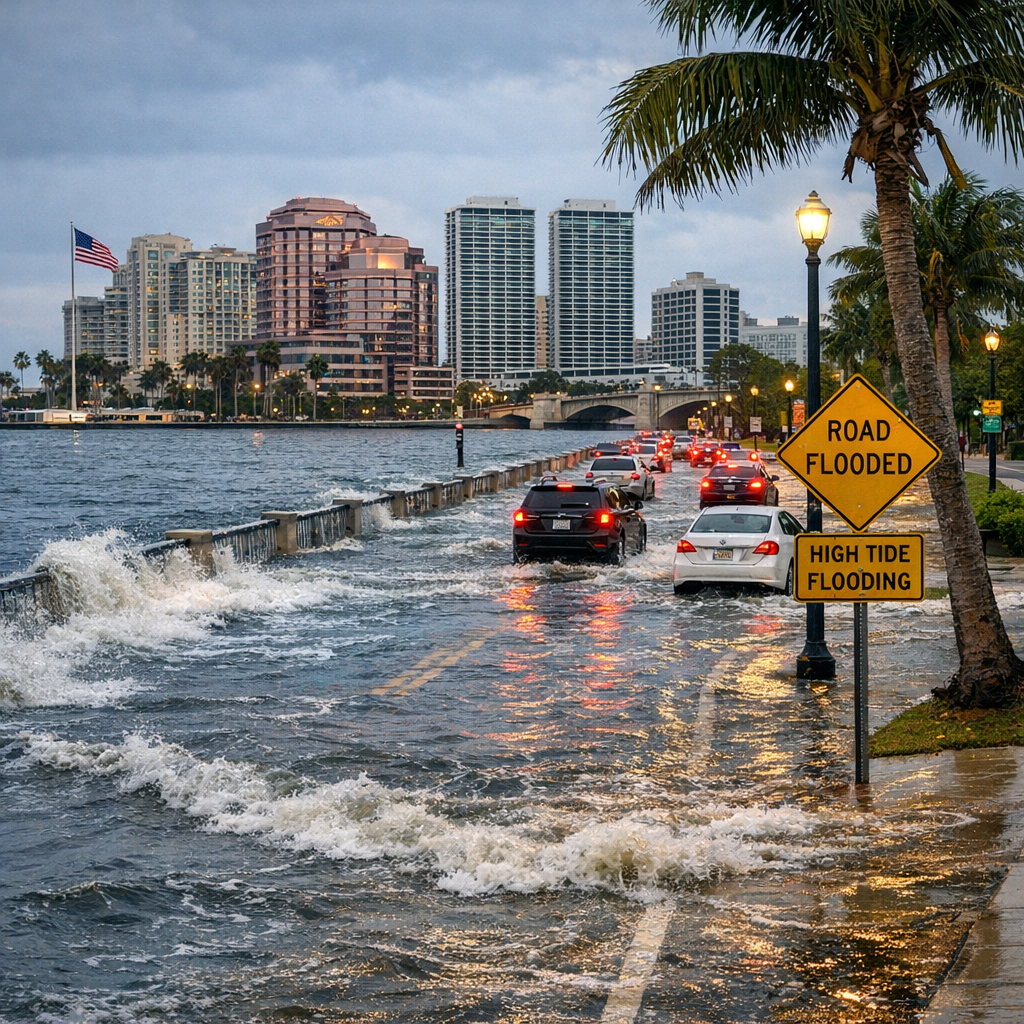
West Palm Beach is on the front lines of rising seas. Projections estimate about 10-17 inches of sea level rise by 2040 and up to 21-40 inches by 2070. Low-lying areas, such as neighborhoods near the waterfront and along the Lake Worth Lagoon, are already seeing the effects of king tides and storm surge during heavy rains. Infrastructure like roads, drainage systems, and underground utilities are especially at risk.
Rainfall Shifts and Drought Threats
Although most annual rainfall falls during the summer wet season, changing weather patterns are altering how that rain is delivered. Intense downpours are becoming more common, and dry spells are expected to lengthen, putting stress on our water supplies and soil moisture. Areas inland face greater variability than coastal zones. When drought occurs, impacts can cascade into landscape health, agriculture supplies, freshwater ecosystems, and even fire risk.
Extreme Heat and Public Health
Summers are already hot and humid in West Palm Beach, but with climate warming, heat waves are growing in intensity. Days over 90°F are common in June-September; projections show those numbers increasing. Urban heat islands—where pavement and buildings trap heat—make dense neighborhoods feel several degrees hotter than greener areas. These conditions exacerbate health risks, especially for older residents, outdoor workers, and people without reliable air conditioning.
Taking Action: How West Palm Beach Is Adapting
The city has adopted several plans to address climate change and build resilience:
- Rethink Paradise: Sustainability Action Plan – focuses on planning for sea level rise, increasing energy efficiency, and strengthening infrastructure to handle extreme weather.
- Flood Vulnerability Assessments – identifying neighborhoods and assets most at risk from storm surge, tides, and intense rainfall. Helps prioritize adaptation investments.
- Climate Action Goals – including targets like reducing greenhouse gas emissions by half by 2035 and achieving net zero by 2050. These align mitigation goals alongside resilience.
What Residents Can Do
Individual choices and community behavior still matter a lot. Here are some steps people can take:
- Support and vote for policies that improve water management, enhance greenspace, and preserve coastal buffers.
- Plant shade trees, use reflective roofing or light-colored landscaping to reduce urban heat.
- Reduce water usage during dry spells, and consider installing rain barrels or other systems to capture runoff.
- Stay informed about flood maps and evacuation plans, especially if you live in a low-lying or shore-adjacent neighborhood.
We can’t stop all climate change effects—but by understanding what’s already shifting in the environment around us, West Palm Beach can stay resilient and better prepared for the challenges ahead.